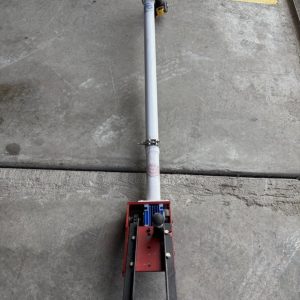
The Aircraft Electric Tow Bar – Mini Max Style offers a space-saving approach to aircraft handling for operators who want powered mobility without purchasing or storing a full-size tug. An Aircraft Electric Tow Bar can reduce the physical effort associated with pushing or pulling an airplane while helping the operator maintain controlled movement in confined areas.
The available Electric Tow Bar for Aircraft combines used-equipment value with the convenience expected from compact powered ground-support equipment. The value of a Used Electric Aircraft Tow Bar depends on condition, completeness, prior use, aircraft compatibility, and the availability of suitable replacement parts or accessories.
The compact design of a Mini Max Aircraft Tow Bar makes it a practical option for individual aircraft owners, small maintenance shops, and shared hangar facilities. An Aircraft Tow Bar with Drill provides powered movement, while the included Aircraft Tow Bar with Charger supports convenient battery maintenance between uses.
Because it occupies less space than many dedicated tugs, a Portable Aircraft Tow Bar may be especially useful where hangar organization and storage capacity are important. The Electric Airplane Tow Bar configuration offers powered assistance for controlled movement while remaining compact enough for many private aviation environments.
This unit may appeal to buyers seeking Aircraft Ground Handling Equipment that is portable, straightforward, and intended for routine light-aircraft positioning. As an Aircraft Hangar Tow Bar, it can support everyday positioning while also serving as practical Aircraft Moving Equipment for suitable private or maintenance operations.
Overview of the Aircraft Electric Tow Bar – Mini Max Style
This type of powered tow bar is designed to support routine general aviation handling where compact size and controlled operation are priorities. The exact performance will depend on aircraft weight, tire condition, ramp slope, surface material, available traction, tow-point design, and the condition of the powered components.
A Mini Max-style unit may help operators manage tight hangar spaces where a larger tug would be difficult to store, turn, or operate. A second person may be appropriate when moving an aircraft in congested areas, through narrow hangar doors, or near obstacles.
Electric Tow Bar for Aircraft Applications
An Electric Tow Bar for Aircraft may support more efficient ground handling by reducing the time and effort involved in routine positioning. The equipment can be useful for private aircraft ownership, maintenance inspections, washing, fueling preparation, hangar organization, and temporary repositioning.
Moving an aircraft without engine power can reduce unnecessary propeller activity, exhaust, noise, fuel consumption, and airflow inside or near the hangar. The operator should follow the aircraft manufacturer’s towing guidance and avoid exceeding steering, nose-wheel, or tow-point limitations.
Buying a Used Electric Aircraft Tow Bar
A Used Electric Aircraft Tow Bar may offer substantial savings compared with a new unit while still delivering reliable service for routine ground handling. The reported six-month period of Navion use may indicate relatively limited service, although buyers should still inspect and test the complete unit.
Buyers should request clear photographs of the frame, wheels, attachment assembly, powered drive, drill, charger, wiring, fasteners, handles, and areas showing wear. When an in-person inspection is not practical, a functional video can help confirm that the powered system operates under realistic conditions.
Mini Max Aircraft Tow Bar Design
A Mini Max Aircraft Tow Bar can be particularly useful for private pilots, individual hangar owners, flying clubs, and small aviation businesses. It may be suitable for hangars with limited turning room because the operator remains close to the tow connection and can make slow directional adjustments.
Aircraft compatibility depends on the nose-wheel or tail-wheel arrangement, tow attachment, aircraft weight, wheel fairings, ground clearance, and steering limitations. Using an incorrect attachment can create slipping, binding, steering damage, fairing contact, tire damage, or loss of control during movement.
Aircraft Tow Bar with Drill Maintenance
The Aircraft Tow Bar with Drill design may appeal to users who prefer readily understood controls and replaceable battery-powered equipment. A drill that is underpowered, damaged, incorrectly adjusted, or poorly secured may provide inadequate performance or create inconsistent movement.
Rapid trigger operation may produce jerking, wheel slip, attachment movement, or unexpected acceleration, especially on smooth or uneven surfaces. Consistent inspection and maintenance help protect both the powered tool and the aircraft-moving equipment from avoidable wear.
Aircraft Tow Bar with Charger Package
The Aircraft Tow Bar with Charger package may be especially valuable when the charger is designed specifically for the included drill and battery system. Correct charger compatibility protects battery performance and reduces the risk of overheating, incomplete charging, or damage to the power system.
A spare compatible battery may be useful for operators who move aircraft frequently or require reliable availability during maintenance operations. A simple pre-use charging routine can prevent interruptions and reduce the risk of leaving an aircraft in an inconvenient location.
Portable Aircraft Tow Bar Storage
The compact unit can be relocated when hangar arrangements change, aircraft are moved to another location, or floor space is needed for maintenance. Good transport practices preserve equipment condition and reduce the risk of losing small components that are necessary for operation.
A wall bracket, floor stand, storage shelf, cabinet, or protected corner may help keep the unit organized and prevent accidental contact inside the hangar. A simple pre-use checklist can confirm that all portable components were returned after the previous operation and remain ready for service.
Powered Aircraft Tow Bar Safety
Powered assistance can improve convenience for owners who operate alone, although aircraft movement should never exceed the operator’s ability to observe and control the situation. The reported Navion application offers a useful reference, but another aircraft may differ significantly in weight, gear design, tire size, or towing geometry.
The user should maintain a clear escape path and avoid standing where the aircraft or tow bar could trap them against a fixed object. Powered towing is most effective when combined with disciplined preparation, low-speed control, clear communication, and secure parking procedures.
Choosing an Electric Airplane Tow Bar
The equipment can support owners of compatible airplanes who need controlled movement before flights, after maintenance, or during hangar organization. Aircraft type alone is not enough to confirm fitment because landing-gear design, tow points, wheel pants, tire dimensions, steering limitations, and weight distribution can vary.
Even a small floor obstruction can affect the tow bar’s wheels, alter steering, or create an abrupt load on the aircraft connection. Training should include normal use, emergency stopping, battery loss, traction loss, attachment inspection, and aircraft securing procedures.
Maintaining Aircraft Ground Handling Equipment
Aircraft Ground Handling Equipment should be selected according to aircraft type, weight, towing arrangement, movement frequency, surface condition, hangar layout, and available storage. Buyers should consider total operating readiness rather than focusing only on the price of the metal towing assembly.
Replacement parts should match the tow-bar design and maintain the strength, fit, and function required for aircraft ground movement. The tow bar should remain clean enough for damage and wear to be seen rather than hidden by grease, dirt, or accumulated debris.
Choosing an Aircraft Hangar Tow Bar
The ability to reposition an airplane conveniently can improve hangar organization and simplify access to doors, storage, tools, and maintenance areas. The hangar environment should be prepared before the aircraft is attached so the operator can focus entirely on controlling movement.
Aircraft should be moved slowly enough that the operator or observer can stop the process before contact occurs. The tow bar should not remain attached where it could create a trip hazard, obstruct maintenance, or place unintended force on the landing gear.
Aircraft Moving Equipment Applications
A drill-powered tow bar may provide an efficient balance of portability, simplicity, affordability, and useful towing assistance. Buyers should consider the heaviest realistic aircraft configuration rather than relying only on empty-weight information.
The landing gear and steering system should be handled within published limitations to prevent excessive rotation, binding, or structural stress. Repairs should restore the original strength and function rather than relying on temporary fixes that may fail under towing load.
Choosing an Electric Aircraft Mover
An Electric Aircraft Mover allows the operator to remain close to the aircraft while controlling direction, speed, attachment, and clearance. Operators should recognize signs of overload, including drill strain, repeated stopping, wheel slip, excessive heat, slow movement, unusual noise, or attachment distortion.
The drill and charger can be maintained separately, and compatible batteries may be replaced when capacity declines. Owners should still plan for battery aging, charger replacement, drill maintenance, worn drive parts, adapter needs, and general structural inspection.
Maintaining Aircraft Mobility Equipment
Aircraft Mobility Equipment can support private ownership, restoration work, maintenance inspections, aircraft sales, cleaning, and shared hangar management. A compact electric tow bar is best viewed as one part of a complete ground-handling approach rather than a universal solution for every movement task.
Equipment should be labeled with compatible aircraft, attachment instructions, operating limits, battery requirements, and inspection responsibilities when used by multiple people. Owners should review equipment needs whenever the aircraft, hangar, ramp surface, storage location, or operating routine changes.
Light Aircraft Tow Bar Applications
Private owners often choose light-aircraft equipment because it is easier to handle and maintain than machinery designed for larger commercial aircraft. A trial fit should be completed without applying substantial force, and any interference should be corrected before operation.
A properly prepared aircraft should roll smoothly enough that the tow bar provides assistance rather than excessive force. A Light Aircraft Tow Bar that is used infrequently still requires periodic inspection because batteries age and metal components can corrode during storage.
Long-Term Tow Bar Ownership
The tow bar can remain useful for many future operations when its frame, drive, wheels, attachments, drill, battery, and click here charger are maintained consistently. Occasional users should test the battery and charger periodically because electrical accessories can deteriorate even while stored.
- Confirm that the towing assembly is complete, structurally sound, correctly adjusted, and free from damage that could affect aircraft movement.
- A short functional test can reveal electrical or drive concerns before the aircraft is connected and positioned near obstacles.
- Keep all accessories labeled and together so the tow bar remains complete, ready, and easy to inspect before the next use.
Aircraft Electric Tow Bar – Mini Max Style Conclusion
When properly matched and maintained, the Aircraft Electric Tow Bar – Mini Max Style can become a dependable tool for efficient general aviation ground handling. The strongest purchase decision begins with confirming aircraft compatibility, inspecting equipment condition, testing powered operation, reviewing package contents, and understanding the intended towing environment.
Whether operators are sourcing an Electric Aircraft Mover, Aircraft Mobility Equipment, or Light Aircraft Tow Bar, safe attachment, adequate capacity, and responsible maintenance remain essential. With professional compatibility review, controlled use, organized storage, and preventive maintenance, the unit can remain a practical alternative to larger towing machinery.